Side project · Founder voice
Natural pools — the rabbit-hole.
A natural pool is a self-cleaning water body — a swim zone plus a planted regeneration zone — that produces drinking-quality water without chlorination. Exponentially cheaper than a conventional pool as size increases, and a reservoir of pristine water for your farm.
From Luca
Why I get excited about natural pools.
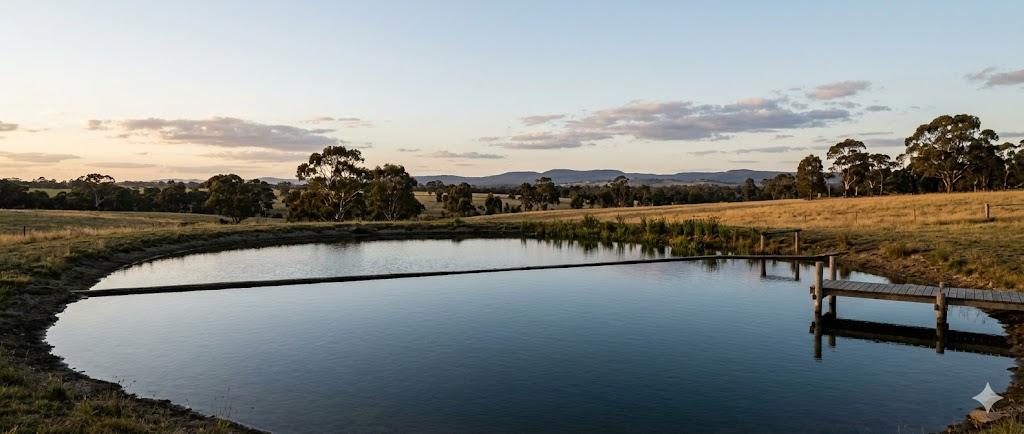
I get excited about natural pools on "agricultural land" because it is technically a farm dam and not subject to the regulatory complications of a swimming pool. That means you can build something at a scale that would be illegal as a pool — and the water stays drinkable for stock, irrigation, or you on a hot day.
The design principle is simple. Half the surface area is the swim zone — clean, deep, the part you actually use. The other half is the regeneration zone — shallow, planted with appropriate aquatic species, and structurally separated from the swim zone by a low underwater wall. Water moves between the two zones, and the plant biology in the regeneration zone does the same work that chlorine does in a conventional pool.
At small sizes — a backyard plunge pool — natural pools cost roughly what a conventional pool costs. The economics flip dramatically at scale. The largest natural pool I've come across in this space cost around $10,000 USD to build at a size that would have been six figures as a conventional pool. The maintenance is also dramatically lower — no chemicals to manage, no pump cycles to time.
On a farm with stock-water needs or fire-water reserve obligations, a natural pool can double as both — it preserves ~75% of total water as pristine reserve for the farm, plus the swim function. That's the case for the agricultural-land framing.
If you want to chase the rabbit-hole, start with David Pagan Butler's Organic Pools — the standard reference, and the source for most of the design thinking I've absorbed on this.
— Luca
Want to talk about a pool?
The founder picks up.
This is a side project, not a service line — but I'm happy to talk it through, especially if you've got an existing farm dam you're thinking of rehabilitating or a property where a natural-pool design might fit into the broader water system.