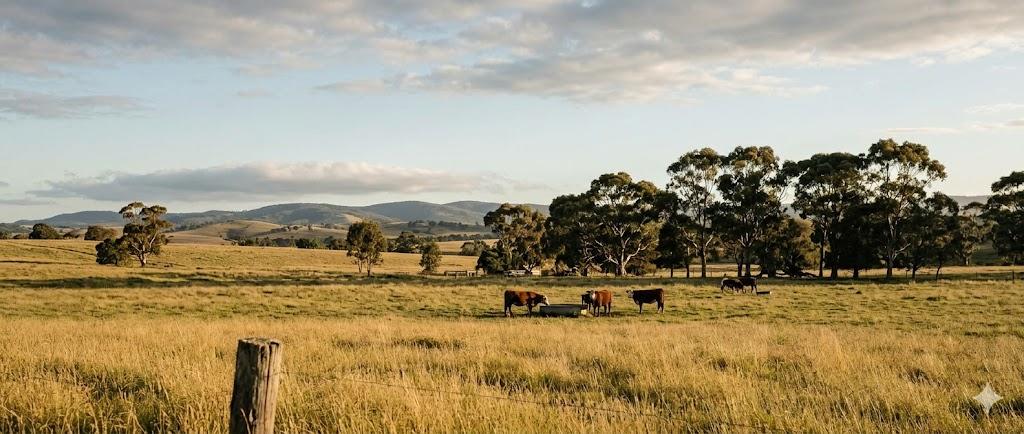
For farmers · For feedlotters · For mixed operations
Biochar for farmers and feedlotters.
Soil carbon, manure stabilisation, ration inclusion, ACCU scoping — and the cheapest on-farm production method available in Australia if you have woody-waste streams of your own.
- 88.6% NATA-tested carbon
- Flame-curtain production on your land
- 0.6–1% inclusion in cattle ration
- ACCU eligibility scoping
The case
Rising input costs, methane scrutiny, tightening margins.
Biochar at 0.6–1% of dietary dry matter has been shown in published trials to improve feed conversion, lift live-weight gain, and reduce enteric methane. On the soil side, it builds long-term carbon and reduces nitrogen leaching from manure and fertiliser. We supply the biochar, advise on how to integrate it into your ration or composting system, and can run on-farm production if your operation has the woody-waste stream for it.
The numbers
What the published research says.
Around +2 L/cow/day
Australian dairy trial
Australian dairy trial — biochar at ~1% of mixed ration
Source: Rebbeck, 2023
Up to 25% live-weight gain
Cattle, biochar at 0.6% DM
Cattle on cassava-based ration with biochar at 0.6% of dietary DM
Source: Leng & Preston
41% reduction
With potassium nitrate
Cattle, biochar combined with potassium nitrate
Source: Leng & Preston
Application rates
Where biochar goes — and how much.
In the ration
- ·Cattle: 0.6–1% of dietary dry matter. Introduce gradually over 7–10 days.
- ·Poultry, pigs, sheep: 1–2.5% of feed.
- ·Dairy: ~1% of mixed ration (per Rebbeck 2023 trial design).
On the soil
- ·Manure / compost: 5–15% by volume in the windrow.
- ·Soil amendment: 2–8% by mass for row crops.
- ·Pasture: 1–3 t/ha incorporated with renovation or top-dressed with compost.
On-farm composting and manure management
Close the nutrient loop.
Biochar makes on-farm composting more valuable: it preserves nitrogen and phosphorus that would otherwise volatilise or leach, while also reducing odour. Apply biochar to manure piles or compost windrows before spreading; the result is a more stable, slower-release nutrient amendment for paddocks and pastures.
For mixed operations with livestock and crops, this is the entry point — biochar-amended compost replaces purchased fertiliser inputs while building durable soil carbon at the same time.
Carbon, grants and ACCUs
Recognition for what you're already doing.
Composting and biochar production are accepted methods for building soil carbon under the Australian carbon credit accreditation framework. If you've already implemented soil-carbon-building practices and want recognition for them, we can help you scope eligibility under the Emissions Reduction Fund and the Australian Carbon Credit Units (ACCUs) scheme.
Credit eligibility depends on project assessment by the Clean Energy Regulator.
Field days
Regenerative farming group? Book us in for a field day.
On-property demonstration of the flame-curtain biochar production method, walk-through of soil-carbon-building practice, and time for questions. Get in touch and we'll work out a date.
Frequently asked questions
How do I work biochar into an existing operation without disrupting things?
Three entry points. Start with manure — apply biochar to manure piles or compost windrows before spreading; least disruption, biggest soil-carbon win. Start with a paddock — biochar-amended compost on a single paddock, measured against a control over one season. Start with the ration — biochar at 0.6–1% of dietary DM for cattle, introduced gradually over 7–10 days. Most operators do all three eventually.
What's the on-farm production option?
If you have woody-waste streams — storm debris, shelterbelt residues, orchard prunings — our flame-curtain method produces biochar at the lowest cost-per-cubic-metre of any method available in Australia. No $500K+ industrial kiln needed. We can run a production day on your property, or train your team to do it. See it on YouTube.
How does this fit into a regen-ag program I'm already running?
Biochar slots in alongside cover-cropping, rotational grazing, no-till, and compost programs — it doesn't replace any of them. The high-T activated profile is what builds the durable soil-carbon component, the manure-binding effect closes the nutrient loop, and the feed-additive use ties in animal performance. If you're already running a regen system, biochar is the easiest layer to add on top.
Can I claim ACCUs for this?
Possibly — composting and biochar production are accepted methods for building soil carbon under the Australian framework. But credit eligibility depends on project assessment by the Clean Energy Regulator, and many regen-ag practices that build carbon don't cleanly map to existing methodologies. We can scope your specific situation honestly.
What kind of field day or training do you offer?
Regenerative farming groups — book us in for a field day. On-property demonstration of the flame-curtain method, walk-through of soil-carbon-building practice, and time for questions. Get in touch if your group is interested.