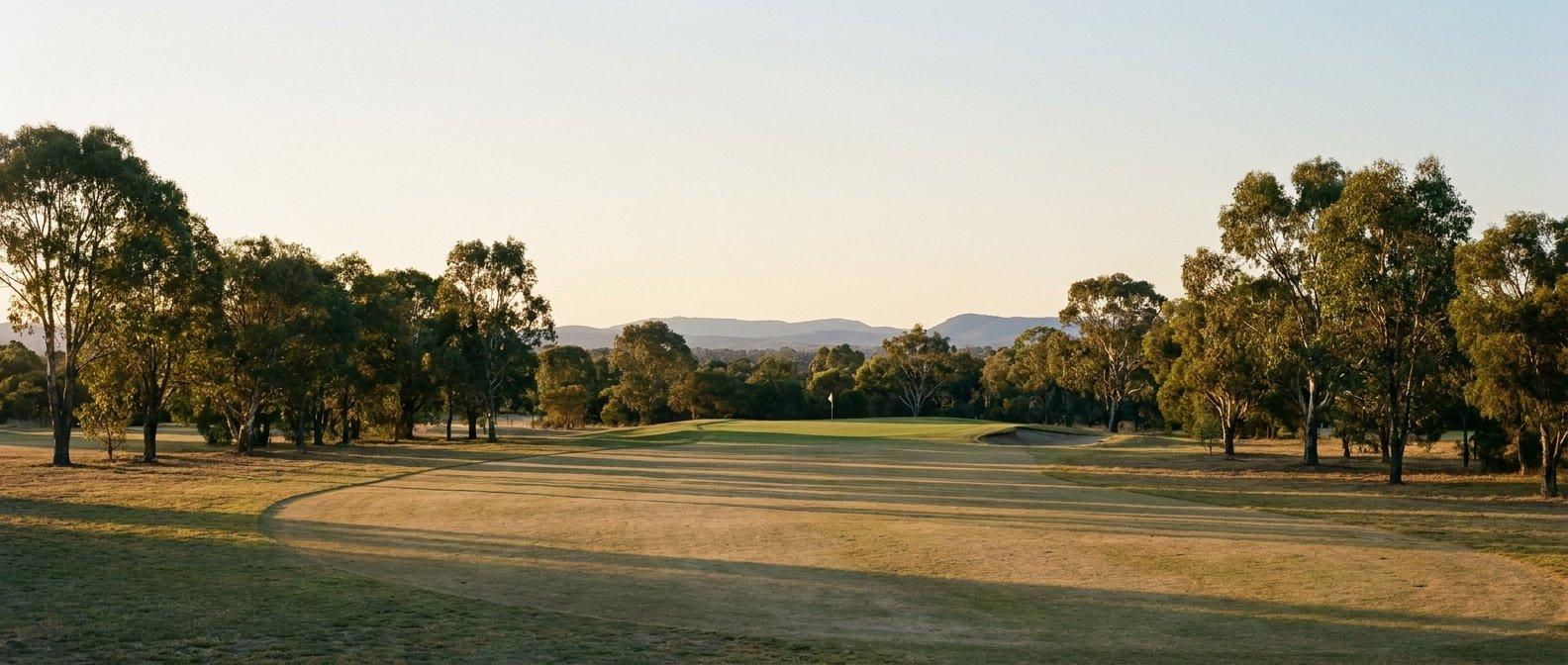
For turf managers · For superintendents
Biochar for golf courses and turf.
Reduce irrigation costs. Improve compaction recovery. Lift nitrogen and phosphorus retention. Australian-made, NATA-tested at 88.6% total carbon, and supplied with a pilot-trial offer for a single green before any course-wide commitment.
- Up to 40% irrigation savings in trials
- USGA-construction-principle compatible
- Pilot trials on a single green
The case for turf
Four levers, one amendment.
Australian turf managers are working against compaction, salinity, irrigation costs, and tighter restrictions on chemical inputs. Possible Agriculture Biochar — our sustainably produced Sugargum hardwood biochar — pulls all four levers at once. Incorporated at 1–2% by volume into the 0–4 cm root-zone layer.
Up to 40%
Irrigation reduction in turf trials
Irrigation savings in turf trials
Source: Possible Agriculture trials
Doubles water-holding capacity of sandy or loamy-sand soils at 9% mixture
Soil water-holding capacity
Soil-level water holding effect
Source: Yu et al., 2013
Up to 98–100% PFAS leaching reduction at 5% activated biochar in low-organic-matter soils
PFAS leaching reduction
PFAS immobilisation
Source: Sørmo et al., 2021
Save water
Reduce irrigation needs by up to 40% in trials where applied.
Woody biochar can double the water-holding capacity of sandy soils at a 9% mixture rate (Yu et al., 2013) — pure biochar itself holds over 2.7× its dry weight in water (Yu et al., 2013) .
In turf trials where Possible Agriculture Biochar has been applied, irrigation needs have been reduced by up to 40% (Possible Agriculture trials) . Results vary by site, soil type and application rate.
Note: a separate US case study (Biochar Now, California) reported up to 50% irrigation savings using a different biochar product — that result belongs to them, not us.
Compaction, salinity, structure
Three problems that share a single amendment.
Lower compaction
Incorporated at 0–4 cm, biochar mitigates subsoil compaction from foot traffic and machinery — the zone where roots establish quickest but are most vulnerable. Result: faster recovery, lower aeration cycles, reduced turf replacement in high-traffic areas.
Salinity resilience
Biochar amendments improve soil structure and reduce the effect of salinity on plant water uptake. In one greenhouse trial, biochar restored ~30% of the water-uptake capacity high-salinity soils lose (Pakistan, 2021).
Better root systems
Improved water and nutrient availability in the root-zone layer supports deeper, healthier root establishment — particularly relevant for new turf installs or recovery after stress events.
USGA & construction principles
Compatible with USGA putting-green construction principles.
Our biochar is compatible with USGA-recommended putting-green construction principles. In peer-reviewed sandy-soil trials, woody biochar amendments have doubled water-holding capacity (Yu et al., 2013) .
Because biochar is non-biodegradable, its long-term effects on highly-draining sports profiles vary by feedstock and rate. We recommend a pilot trial on a single green or practice fairway before any full course amendment.
See the Australian Turfgrass Management Journal article in our biochar library for a balanced review of biochar in sports turf.
Application
How to use it.
- 1 Top-dress scarified turf — easiest regular application. Biochar washes through to the root zone over the next few weeks.
- 2 Underlay turf roll-out — for new construction or full re-turfing. Best for root penetration and long-term survivability.
- 3 Mix 5–10% with sand in divot buckets — ongoing recovery on tees, fairways, and high-traffic patches.
- 4 Fertigate — mix biochar with your regular fertiliser program to reduce N&P losses in rain events.
Frequently asked questions
Is your biochar USGA approved?
No biochar is USGA-approved — the 2018 USGA Recommendations don't mention biochar at all, and any product claiming USGA approval is over-stating. What we do say: our biochar is compatible with USGA-recommended putting-green construction principles, and in peer-reviewed sandy-soil trials, woody biochar amendments have doubled water-holding capacity
How do I apply it on an existing green?
Top-dress scarified turf for the easiest regular application — the biochar washes through to the root zone over the next few weeks. Alternatively, underlay turf during roll-out for new construction (best root penetration), or mix 5–10% with sand in divot buckets for ongoing recovery. For fertigation programs, mix biochar with your regular fertiliser to reduce fertiliser losses in rain events.
What about the 50% water-bill savings other people quote?
The 50% figure is from a US case study by Biochar Now (California) — a different producer, a different product. We attribute it to them. The number from our own turf trials in Australia, where the product has been applied: up to 40% irrigation reduction
Does biochar disrupt the sand-based profile?
In small inclusion rates (1–2% by volume in the 0–4 cm root zone), no. Biochar improves water-holding without disrupting the drainage characteristics that make sand profiles work. At higher rates the drainage curve does change — which is why we recommend a pilot trial on a practice fairway or back-of-range green before any course-wide amendment.
Will it work in salty soils?
Biochar amendments improve soil structure and reduce the effect of salinity on plant water uptake. One greenhouse trial (Pakistan, 2021) found biochar restored ~30% of the water-uptake capacity that high-salinity soils lose. Site-specific outcomes vary.