Service · Water
Biochar-based water treatment.
Stormwater filter media, runoff nutrient capture, contaminated-site remediation, natural-pool design advisory. Same product line, different application — adapted to existing waterway management plans without large infrastructure investment.
The numbers
What biochar pulls out of water.
86%
Stormwater filtration
TSS and nitrate removed in stormwater column trials.
Source: ASCE study
47%
Phosphate
Phosphate removed in stormwater column trials.
Source: ASCE study
Up to 98–100% PFAS leaching reduction at 5% activated biochar in low-organic-matter soils
PFAS in low-organic-matter soils
PFAS immobilisation
Source: Sørmo et al., 2021
Applications
Where biochar fits in a water project.
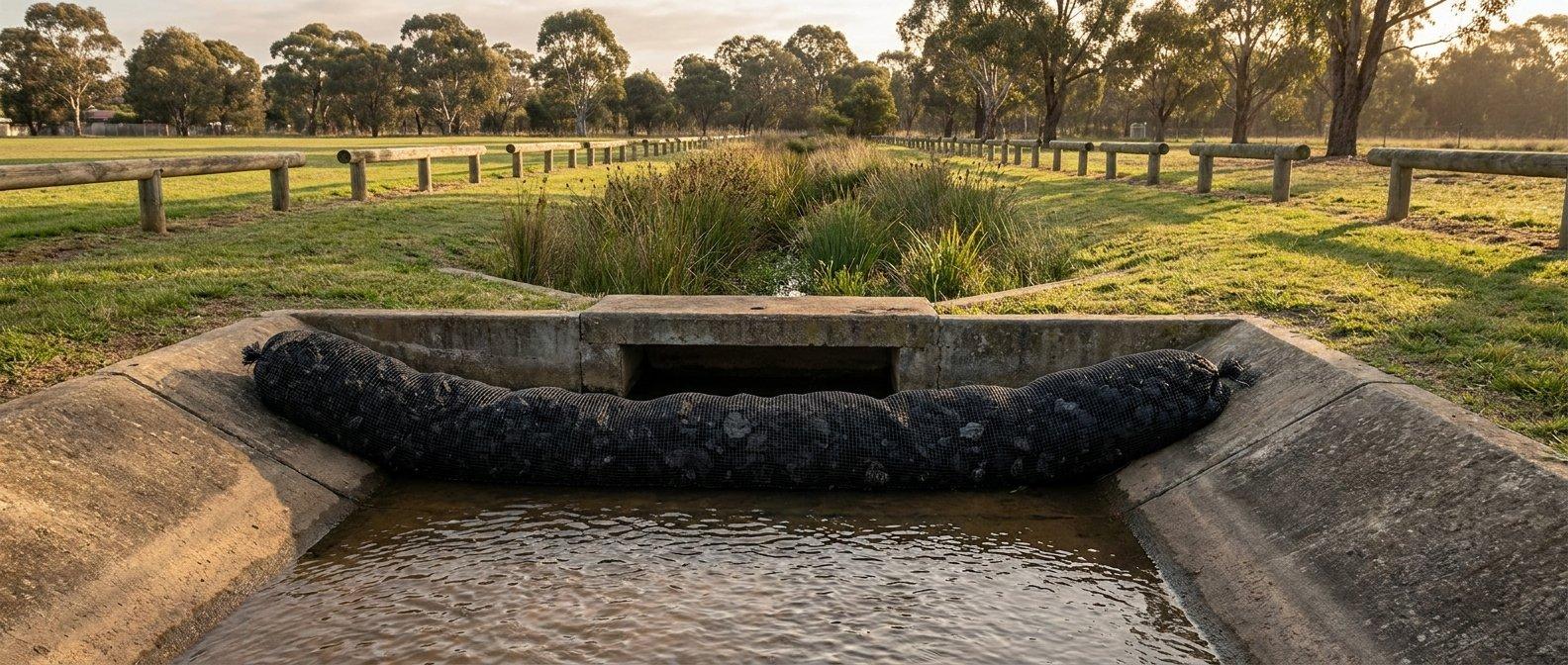
From biochar filter "sausages" placed in runoff zones to biochar amendments in sports-ground subsoils that capture nutrient leaching before it reaches waterways, we can scope and supply for catchments of any size — without large infrastructure investment.
High-temperature activated wood biochars like ours adsorb and immobilise heavy metals (arsenic, cadmium, mercury) and have been shown to reduce PFAS leaching by up to 98–100% at 5% application in low-organic-matter soils (Sørmo et al., 2021) . Performance reduces in high-organic systems; for contaminated-site remediation we recommend a site-specific pilot trial.
Frequently asked questions
Does it actually work on stormwater contaminants?
For TSS, nitrate, phosphate, and many heavy metals, yes — and the data is strong. In stormwater column trials, biochar filter media reduced total suspended solids by 86%, nitrate by 86%, phosphate by 47%, and heavy metals by 18–75%
What does a biochar filter installation look like physically?
Three typical forms. Filter sausages — biochar-filled mesh tubes placed across runoff zones or at stormwater inlets. Subsoil amendments — biochar mixed into the subsoil of a parkland or sports ground that's already filtering runoff. Inline media beds — a structured filter bed (usually layered with sand or gravel) integrated into an existing stormwater treatment train. Best fit depends on your hydraulics and contaminant profile.
You mention natural pools — what's that?
A separate topic, but related. A natural pool is a self-cleaning water body — a swim zone plus a planted regeneration zone — that produces drinking-quality water without chlorination. The same biology-first principles apply. See our Natural Pools page for the founder's view on this side project.