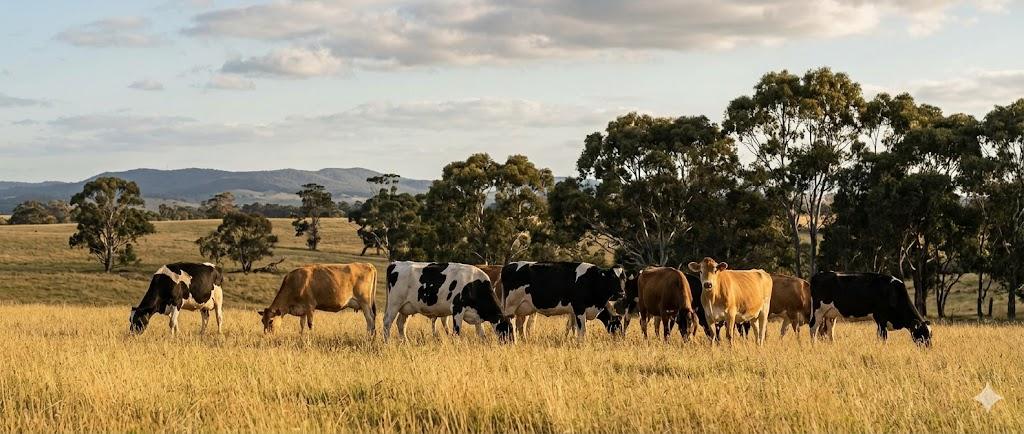
Dairy cattle on Australian pasture at late afternoon

For farmers · For dairy operators · For feedlots

Biochar for cattle, dairy and feedlots.

Better feed conversion. Lower enteric methane. Healthier soils when the manure comes back out. The published evidence is strong; the Australian dairy trial pointed at around +2 L/cow/day.

  • Up to +2 L/cow/day (Rebbeck dairy trial)
  • 22–41% methane reduction (published)
  • 0.6–1% of dietary DM for cattle

Australian dairy trial

Around +2 L/cow/day in a four-dairy South Australian trial.

In an Australian dairy trial across four South Australian dairies (Rebbeck, 2023) , one dairy adding biochar at ~1% of the mixed ration reported around +2 L/cow/day in milk yield, +0.1 kg/day in solids, and ~$130k/year in additional profit on a 250-cow herd.

That trial used Mara Seeds Biochar. Possible Agriculture Biochar is a higher-grade hardwood biochar produced at higher pyrolysis temperatures than the product used in the trial, so we expect equivalent or better results — Possible Agriculture has not yet replicated the trial in its own product. Site-specific results vary by herd, ration and management.

Dairy South Australia 2023

Rebbeck, 2023 — South Australian dairy

Four-dairy trial, biochar at ~1% of mixed ration

~+2 L/cow/day

Milk yield increase (one of four dairies)

Trial: Rebbeck (2023) — published case study

Product used: Mara Seeds Biochar

Possible Agriculture Biochar is higher-grade hardwood at higher pyrolysis temperature; we expect equivalent or better results, replication pending.

Cattle research

Feed efficiency, live-weight gain, and methane.

Up to 25% live-weight gain

Live-weight gain (cattle, 0.6% DM)

Cattle on cassava-based ration with biochar at 0.6% of dietary DM

Source: Leng & Preston

22% reduction in enteric methane

Methane reduction — biochar alone

Cattle, biochar alone in ration

Source: Leng & Preston

41% reduction

Methane reduction — biochar + KNO₃

Cattle, biochar combined with potassium nitrate

Source: Leng & Preston

In a published cattle trial on a cassava-based ration (Leng & Preston), adding biochar at 0.6% of dietary dry matter increased live-weight gain by 25% and improved feed-conversion ratio from 23.2 to 19.1. The trial also recorded a 22% reduction in enteric methane from biochar alone, and a 41% reduction when biochar was combined with potassium nitrate as a non-protein nitrogen source.

Caveat: that trial used rice-husk biochar at 900°C. Possible Agriculture Biochar is hardwood at high pyrolysis temperature — the high-temperature property transfers, the feedstock differs. Site-specific results vary by ration and stock class.

Application rates

Inclusion rates by stock class.

Cattle

0.6–1%

of dietary dry matter

Mixed into the ration. Introduce gradually over 7–10 days.

Poultry, pigs, sheep

1–2.5%

of feed

Per general feed-supplement research; species-specific guidance on request.

Soil & manure

5–15%

by volume in compost

Applied to manure piles or compost windrows to preserve N&P and reduce odour.

Manure handling

Biochar in your composting and manure system.

Biochar makes on-farm composting more valuable. It preserves the nitrogen and phosphorus that would otherwise volatilise into the atmosphere or leach into groundwater — while reducing odour at the same time. Apply biochar to manure piles or compost windrows before spreading; the result is a more stable, slower-release nutrient amendment for paddocks and pastures.

For mixed operations with livestock and crops, this closes the nutrient loop — manure-biochar compost replaces purchased fertiliser inputs while building durable soil carbon at the same time.

Carbon, grants and ACCUs

If you're building soil carbon, you may be able to monetise it.

Composting and biochar production are accepted methods for building soil carbon under the Australian carbon credit accreditation framework. If you've already implemented soil-carbon-building practices and want recognition for them, we can help you scope eligibility under the Emissions Reduction Fund and the Australian Carbon Credit Units (ACCUs) scheme.

Credit eligibility depends on project assessment by the Clean Energy Regulator. We'll be honest about what your specific situation supports.

~165 t CO₂-e sequestered per hectare

1% SOC equivalent

1% increase in soil organic carbon (top 30 cm, bulk density 1.5 t/m³)

Source: SCIG

Frequently asked questions

Is your biochar safe in a feed ration?

Yes — at the inclusion rates we recommend (0.6–1% of dietary DM for cattle, 1–2.5% for poultry, pigs, sheep). Our biochar is feed-grade activated hardwood biochar made from food-safe Australian Sugargum at high pyrolysis temperatures. We recommend introducing gradually over 7–10 days to allow the rumen to adapt.

How does it actually work in the rumen?

Two mechanisms. First, the porous biochar structure provides surface area for beneficial rumen microbes to colonise — which improves feed conversion. Second, biochar binds methane precursors in the rumen, which is why the published methane reductions are so substantial (22% biochar alone, 41% combined with potassium nitrate ). On top of both, biochar acts as a binder for mycotoxins and reduces digestive disturbance.

Will the Rebbeck dairy result transfer to my operation?

The Rebbeck trial used Mara Seeds Biochar — different feedstock, different pyrolysis profile to ours. Possible Agriculture Biochar is higher-grade hardwood at higher pyrolysis temperatures than the product used in that trial, so we expect equivalent or better results — replication pending. Site-specific results always vary by herd, ration and management. If you're running a trial we can help you design it so the data is actually useful.

What about manure handling?

Biochar makes on-farm composting more valuable: it preserves nitrogen and phosphorus that would otherwise volatilise or leach, while reducing odour. Apply to manure piles or compost windrows before spreading — the result is a more stable, slower-release nutrient amendment for paddocks and pastures.

Can I claim carbon credits for this?

Biochar production and composting are accepted methods for building soil carbon under the Australian framework. We can scope eligibility under the Emissions Reduction Fund and the ACCU scheme. Credit eligibility depends on project assessment by the Clean Energy Regulator — we'll be honest about what your specific situation supports.

Want to trial biochar on your herd or in your feedlot?

Get a quote